
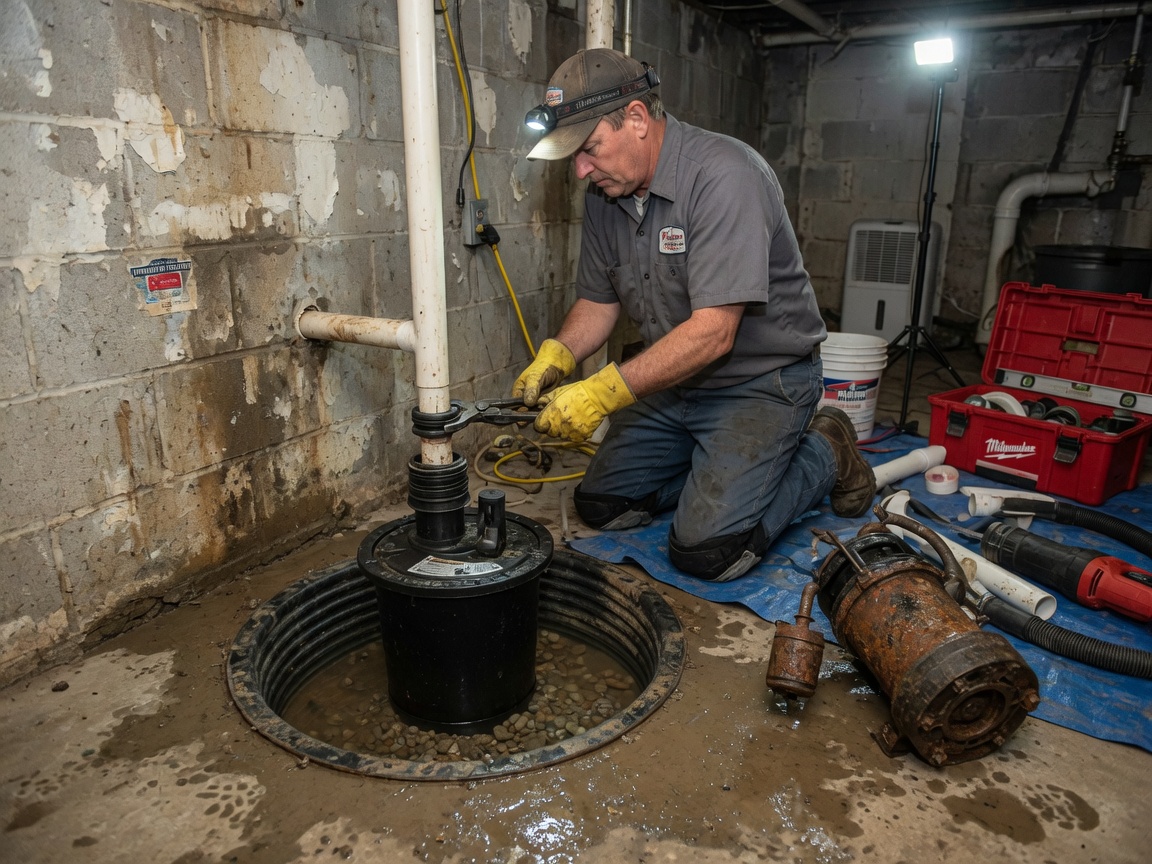
Sebring is a small village in western Mahoning County with a dense core of early twentieth-century housing from its pottery-industry period. Those homes were built close together on compact lots with shallow basements, and almost none of them had a sump system originally. What exists now was added later, which makes pit size, pit placement and discharge routing the first things worth checking when a basement starts taking water.
The compact lots create the discharge constraint that defines work here. There is limited distance between one foundation and the next, so a line has little room to carry water genuinely clear of the house, and an outlet that empties a few feet from the wall simply gives the pump the same water to move again. It also raises the neighbor question, because water pushed sideways on a narrow lot lands on someone else's property. Getting discharge right in Sebring takes more planning than it would on an acre, and it is usually what separates a repair that holds from a basement that keeps getting wet.
The other recurring Sebring finding is sediment. Pits that have been in the ground for forty years and never cleaned out hold several inches of silt and gravel, which jams floats and wears impellers. A cleanout is cheap and routinely buys an otherwise sound pump a couple more seasons.
Around Sebring
We regularly work near:
- 📍Sebring McKinley High School
- 📍Sebring Lake
- 📍Route 62
- 📍Sebring village park
- 📍Ohio Avenue
Sump Pump Repair in Sebring — Local Notes
- •Dense early twentieth-century village housing on compact lots with shallow basements.
- •Limited distance between foundations constrains where discharge water can go.
- •Short discharge runs recirculate water back toward the footer.
- •Decades-old pits with heavy sediment buildup jam floats and wear impellers.